
Building Literary Equity and the Milk Writing System
October 16, 2025
by Ricardo Neal
My Path Into Educational Justice
Education and the essential nature of knowledge have been integral to my identity since my early childhood in Jamaica. I am also acutely aware of what happens when formal education stops at an early age. I am all too familiar with abject poverty and, unfortunately, the negative consequences that emerge when people and communities lack appropriate education. My journey into education did not begin in a classroom–it started by watching my mother and her best friend develop and operate a basic school in Jamaica. Basic school in the Caribbean is equivalent to PreK through kindergarten in the United States. That early exposure planted a seed that would ultimately lead me on a path to organizing for and fighting for education justice.
My time leading the historic Freedom House in Boston solidified my commitment to working with communities to ensure that parents and communities were seen as valuable partners for high-quality education. Much of my work focused on providing communities with access to decision-makers and advocating for educational justice. I wanted parents to have a voice, and I wanted students who were not on track to graduate to have a fighting chance. Frankly, it was witnessing young Black men die early or being incarcerated that cemented my resolve to never give up on the fight.
When I eventually moved to Washington, D.C., I entered the schoolhouse for the first time as a practitioner. I had advocated for education reform from the outside, but I wanted to understand what it meant to support students and families from within. Those six years in the building were invaluable. They gave me a firsthand look at the brilliance of young people and the dedication of educators working tirelessly on their behalf. When I transitioned out of the school environment, I carried that experience into an enriched mission: creating systemic change that would expand opportunity for young men of color across the country.
Why We Created We Will All Rise
In 2020, my colleagues and I founded We Will All Rise to directly address the barriers that limit the educational success of Black and Brown men. Many organizations begin with a whiteboard or a strategic plan. We began with the voices of six young men who dreamed of better futures for themselves and others. We asked them what support they needed, what obstacles they faced, and what kind of organization they wanted to see. We asked them to dream without boundaries. Their answers shaped everything that followed.
From that foundation, we built signature programs: the Free MIND Collective, MKE Rising (now known as I Can Teach), and the BELIEF Fellowship. Each is designed to combine financial support with high-intensity mentoring and professional development. These are not handouts; they are investments. Our young men receive direct cash assistance grants, leadership training, and a network of support that helps them persist through college and beyond. Most importantly, they are seen, heard, and valued as whole human beings.
What makes this work unique is that it is responsive and it centers on the power of possibilities. The young men guide the evolution of the programs through ongoing surveys, advisory roles, and conversations with our team. We view our scholars as active architects of their own success. Their involvement ensures that our organization remains accountable to the very people it was created to serve, and it keeps us grounded in the reality of their lived experiences.
What the Data Tells Us
The national six-year graduation rate for Black men hovers around 34%, which is completely unacceptable. At We Will All Rise, our young men graduate at rates that exceed 80%. Those numbers reflect what happens when we combine resources, mentoring, and love in ways that traditional systems often fail to do.
But behind every percentage is a story. There is a student who almost left school because of financial strain, but stayed because he received one of our renewable grants. There is the young man who battled self-doubt but found encouragement in a mentor who would not let him quit. These stories remind me that our work goes well beyond statistics. We keep in mind that we support human beings who deserve the chance to thrive.
Barriers We Must Confront
Even with these successes, the obstacles are real. Too many of our young men attend underfunded schools long before they ever set foot on a college campus. Financial aid often falls short, leaving students with impossible choices between education and survival. And when Black and Brown men do enter the classroom as future educators, they are too often viewed through a narrow lens as disciplinarians rather than instructional leaders.
Representation matters. If our boys never see men of color teaching math, leading schools, or standing at the head of a classroom, how can they imagine themselves in those roles? That lack of visibility is a systemic barrier that requires intentional effort to overcome. Our programs seek to change that narrative by placing young men of color in classrooms early, paying them for their work, and surrounding them with mentors who model what is possible.
Beyond visibility, we must also confront the stereotypes that weigh heavily on our young men. Too often, they are underestimated, misunderstood, or boxed into limited roles. These barriers do more than shape how others see them; they shape how our young men see themselves. Breaking those cycles requires holistic support systems (e.g., financial, emotional, and professional) that affirm their worth and expand their vision of what is possible.
The Power of Partnership and Brotherhood
We rarely work in isolation. Our success depends on the partnerships we build with universities, local organizations, and city governments. Funders, advocates, and local coalitions make it possible for us to move from vision to action.
On a personal level, my partnership with my colleagues, most of whom are male educators of color, has been essential. We are different in many ways, but our differences complement each other. Where I bring nonprofit strategy and advocacy experience, the men bring deep expertise from decades in schools. Together, we balance each other, challenge one another, and, most importantly, trust one another. That bond allows us to model for our young men what authentic collaboration looks like.
At times, brotherhood may be built upon agreement; however, it is always about respect, honesty, and a shared commitment to a common mission. We push each other, sometimes uncomfortably, because we know the stakes are too high for anything less. That kind of partnership is what keeps us moving forward, and it mirrors the kind of supportive relationships we want our young men to build for themselves.
What We Need to Keep Rising
The growth of our organization proves what is possible when we invest deeply in young men of color. However, we need more, and we recognize that we are operating in an environment where we must do more to educate everyone on why it is in the best interest of the country and local communities to invest in our work. We need funders to understand that the quality of service matters more than sheer numbers. We need long-term investments that ensure our programs will endure for generations to come. We need colleges and employers to open their doors and partner with us so our young men have clear pathways from education to meaningful careers. We need public institutions to reaffirm the essential nature of this work.
Most of all, we need people to recognize that this is nation-building work. If we continue to accept a 34 percent college graduation rate for Black men, we are accepting a crisis that will affect every community in this country. Our young men are brilliant, capable, and worthy of investment. They deserve better, and we have the power to provide it.
An Invitation to Join Us
I invite you to join us in this mission. Visit wewillallrise.org to learn more about our programs, the young men we support, and the outcomes we are achieving. If you are an educator, a policymaker, a funder, or simply someone who believes in equity, there is a place for you in this work. Come contribute your resources, your expertise, and/or your time.
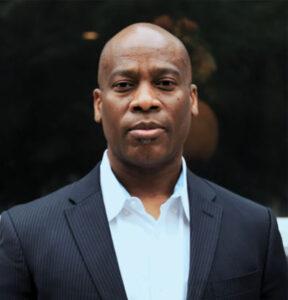
Ricardo Neal
Ricardo Neal is Founder, President and Chief Executive Officer of We Will All Rise and Principal and Managing Director for The Propel Agency, LLC., a management and leadership consulting firm.